

Can Meeple Escape the Neurophoria?
Can Meeple Escape the Neurophoria? is an exhibition that looks at how our relationship with intelligent technologies, such as AI, is changing. It explores how this shift shapes our sense of self, our ability to make choices, and our connection to machines as we evolve alongside them.
Curated by FACT’s 2025 Curator-in-Residence, Milia Xin Bi, the exhibition draws inspiration from tabletop games, where every player’s decision rewrites the story. In this exhibition, the audience becomes the meeple: a human-shaped game piece whose actions have real-world consequences. The artworks invite you to take part, make decisions, and consider how your actions influence our technological future.
FACT, 88 Wood Street, Liverpool, L1 4DQ
Gallery 2
Can Meeple Escape the Neurophoria? is an exhibition that explores our evolving relationship with intelligent technologies, focusing on how subjectivity and agency are negotiated and reconfigured within recursive feedback loops between humans and machines.
The figure of the meeple originates from board games: a small, anthropomorphised pawn that stands in for the player within a bounded system of rules. In the exhibition, the Meeple becomes a role-playing proxy for the audiences. It represents us as we navigate neural media environments shaped by artificial intelligence, algorithmic learning, and decentralised network infrastructure—systems that both guide and constrain our actions while continuously learning from them.
Neurophoria is a pseudo-reality where human cognition becomes deeply entangled with intelligent systems. As data and affect are incessantly extracted, processed, and circulated, perception and behaviour begin to reorganise around algorithmic feedback. At the same time, these “intelligent” meshes are themselves shaped by the actions, sensations, and collective thinking of the agents embedded within them. Neurophoria is thus a zone in which hybrid agency emerges—distributed across entangled relations rather than residing in any single actor. This agency is neither static nor evenly distributed, raising questions of power, optimisation, and control within these shared environments, and operating not only at ideological levels but also through mundane, everyday processes.
Drawing from the grammar of tabletop gaming, the exhibition unfolds its narrative through four artworks, and through the audience’s decision-making, negotiation, and improvisations as Meeples within them.
Vytas Jankauskas is an artist, designer and educator who explores how technology shapes everyday life. He alters everyday devices to exaggerate and reveal the hidden dynamics of technology.
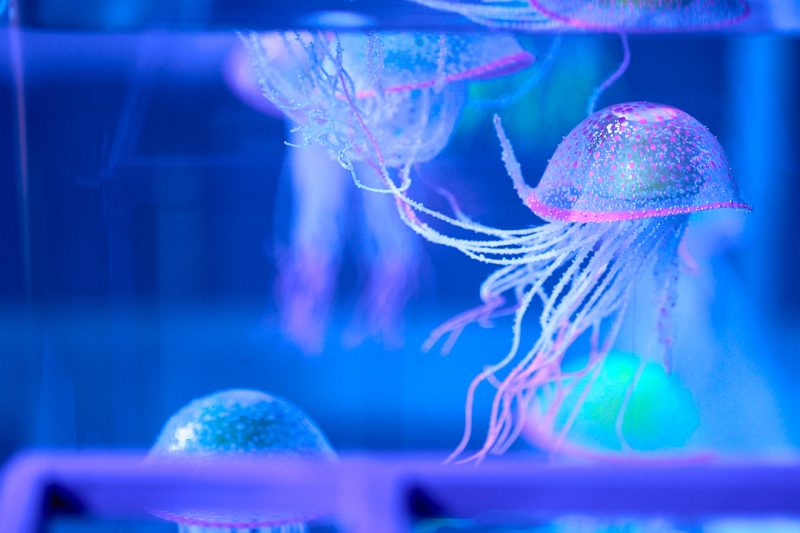
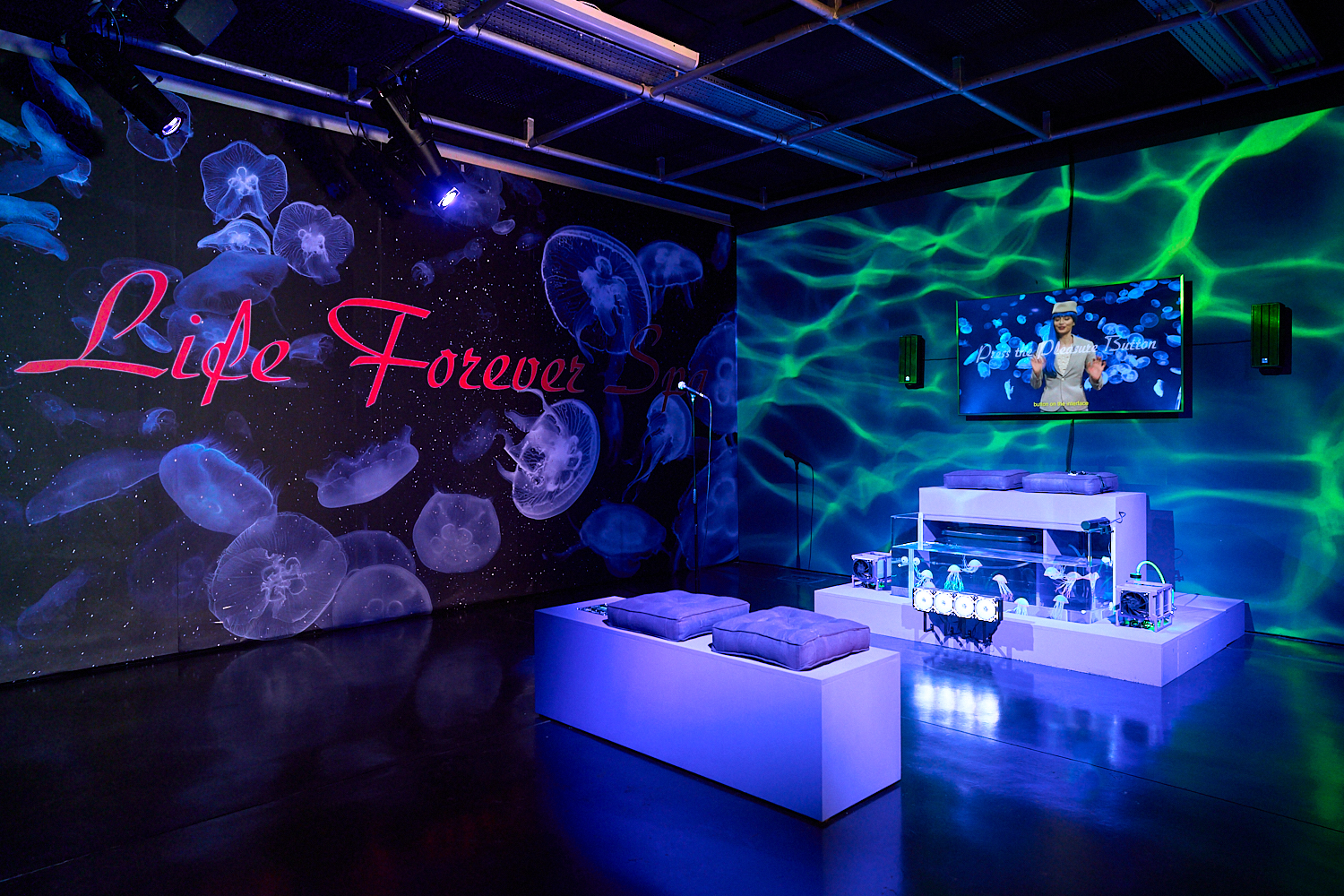
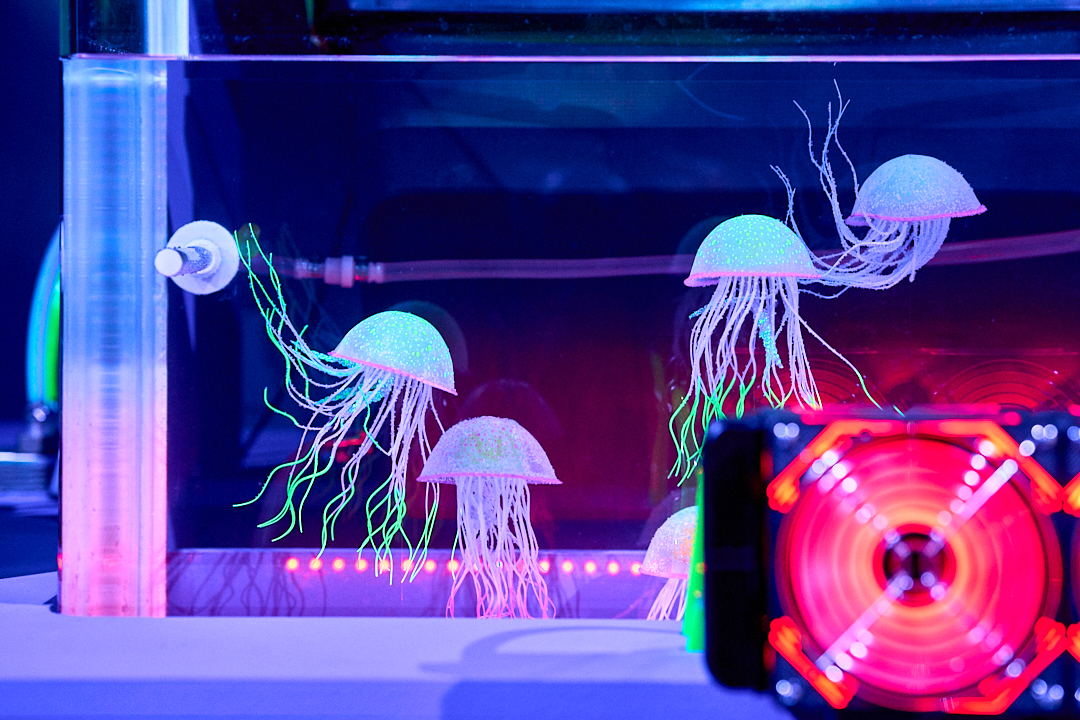
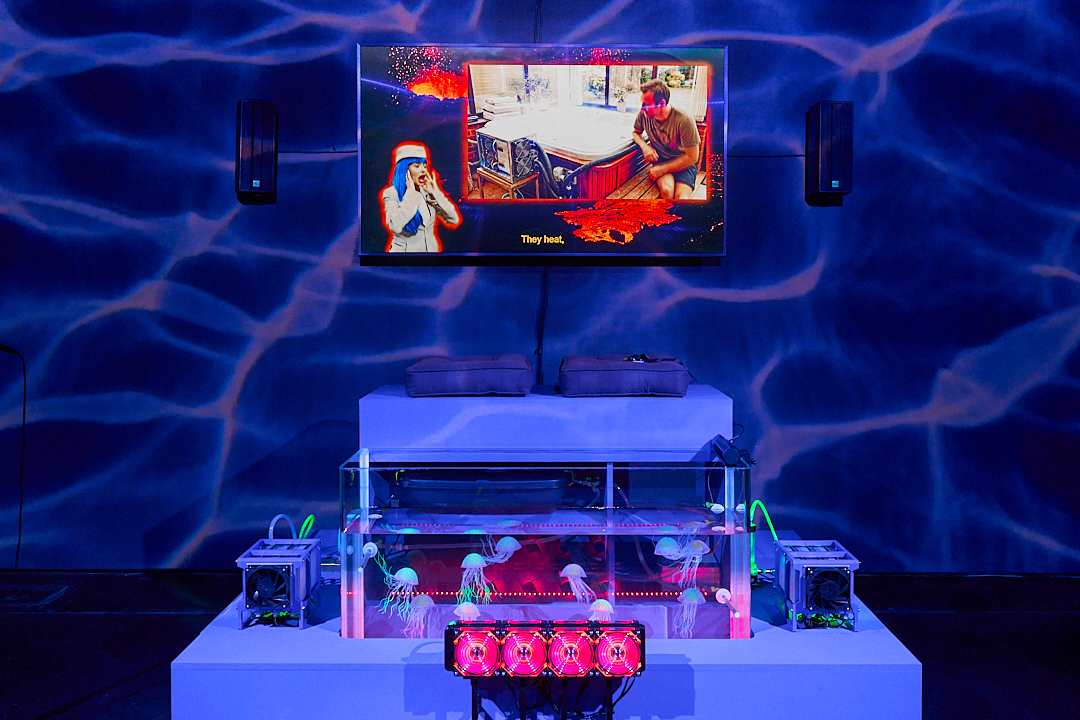
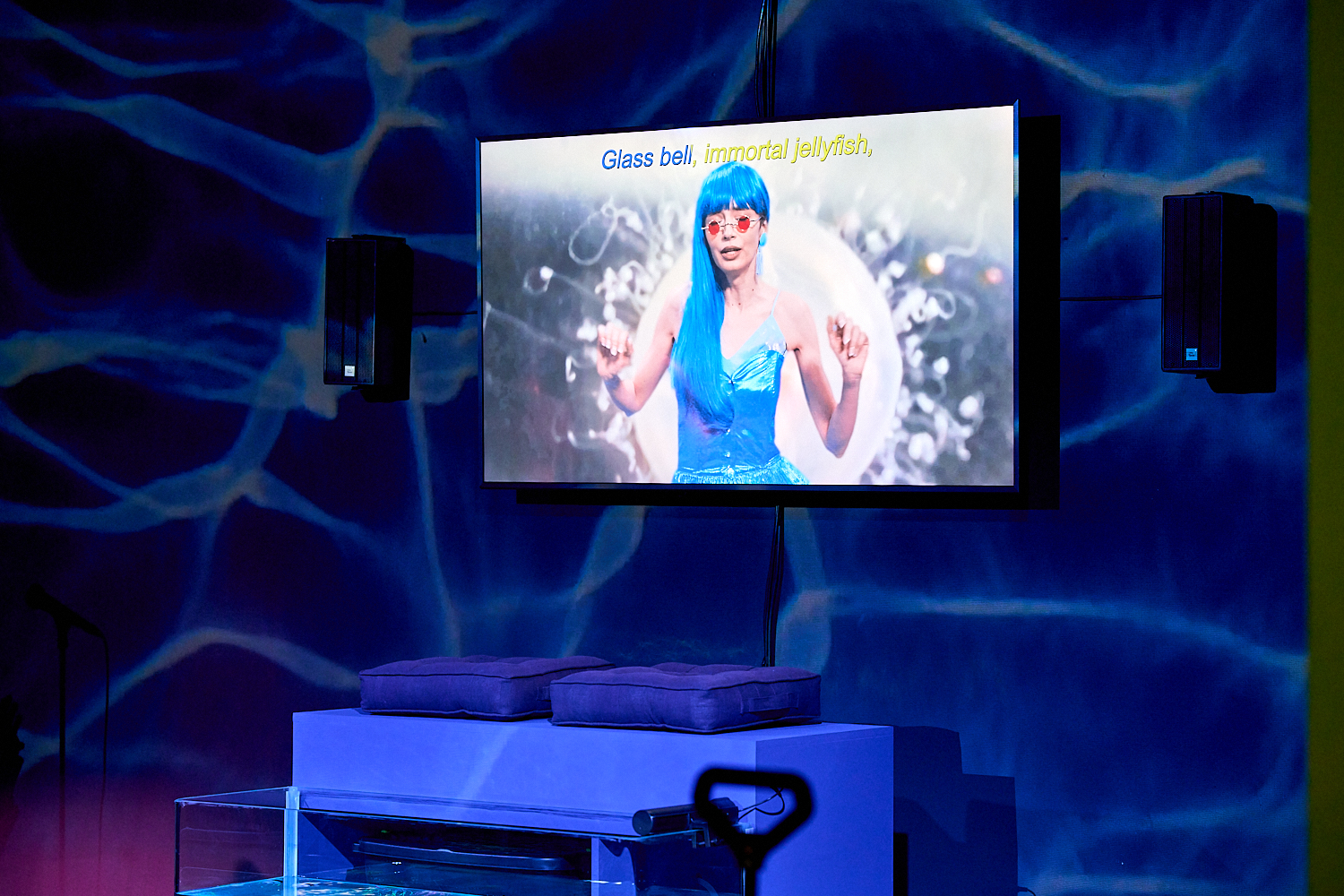
Thermodynamics is a field of physics that explores the relationship between heat and other forms of energy. Recent research suggests that life emerges from an organism’s ability to release heat. In this new artwork, Life Forever, Vytas invites us into an absurd ‘jellyfish wellness spa’, where jellyfish float inside a tank warmed by cryptominers - machines that use computer power to generate cryptocurrency, and produce significant heat. In a video, the spa’s host, Lola, prepares visitors for a treatment that raises questions about our values, desires and pleasure-seeking lifestyles in the face of the climate crisis.
Vytas draws connections between jellyfish, cryptominers and humans, showing how each of these interacts with heat as an essential part of its existence. Cryptominers consume enormous amounts of energy to produce speculative digital value - just as humans burn energy in their search for meaning, profit and pleasure. Unusable for much else, cryptominer machines quickly become obsolete, echoing our own patterns of production, consumption and waste that drive ecological imbalance and climate breakdown, a cycle that repeats until it collapses. Jellyfish, however, are unique in their ability to adapt. Unlike other species, including humans, they thrive in warming oceans. Some can even revert to earlier life stages, giving them a form of biological immortality.
Spa host Lola is a well-meaning spiritual healer whose good intentions are distorted by her consumerist desires and faith in technology. Convinced that jellyfish immortality might hold the key to solving the climate crisis, she guides you, the guests, through the experience. A Tamagotchi-style interface gives you control over the spa’s heat flow and profit, letting you choose between making money or keeping the jellyfish alive. Based on your decisions, you may be invited onto a karaoke stage to sing along to remixed songs by Mr Immortal Jellyfish Man, the alter ego of Dr Shin Kubota. A leading jellyfish research scientist, karaoke star and the inspiration for this artwork’s title, Kubota has dedicated his life to uncovering the immortal potential of jellyfish.
Through humour and gamified interaction, Vytas’ Life Forever spa invites us to reflect on how our pursuit of comfort, entertainment and technological convenience shapes the world. It asks us to reconsider what we value, what we care for, and how our choices feed into larger systems that influence the future.
Starring: Maria Guta as Lola Lane
Production assistant: Anaëlle Jud
Very special thanks to: Eléa Rochat, Nicolas Baldran, Samy Bouard Cart, Rémy Opalinski, Vuk Vukmanović, Anne Dousset, Damien Duparc and Ding Ding.
Original song by Dr Shin Kubota / Mr Immortal Jellyfish Man, adapted into English.
Commissioned by FACT Liverpool. Supported by the Swiss Arts Council Pro Helvetia
Photo by Rob Battersby
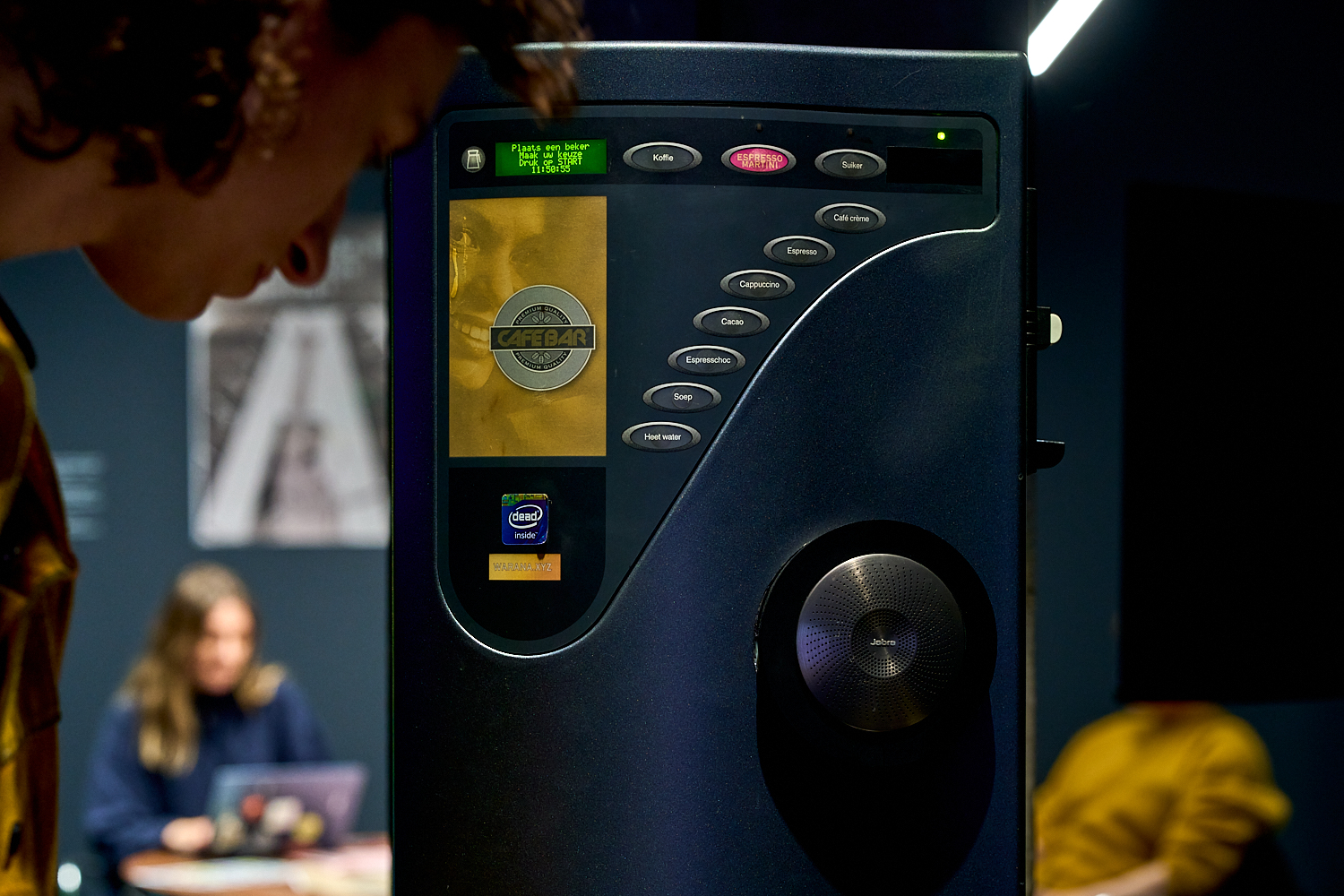
Photo by Rob Battersby
Jan Zuiderveld is an artist, researcher and technologist who explores how technology and everyday life connect. He makes small changes to familiar objects to help us feel the presence of AI, rather than only think about it. In this exhibition, Jan presents two artworks that give large language models (LLMs) a voice and physical form, prompting playful questions about what machines can do and how we relate to them.
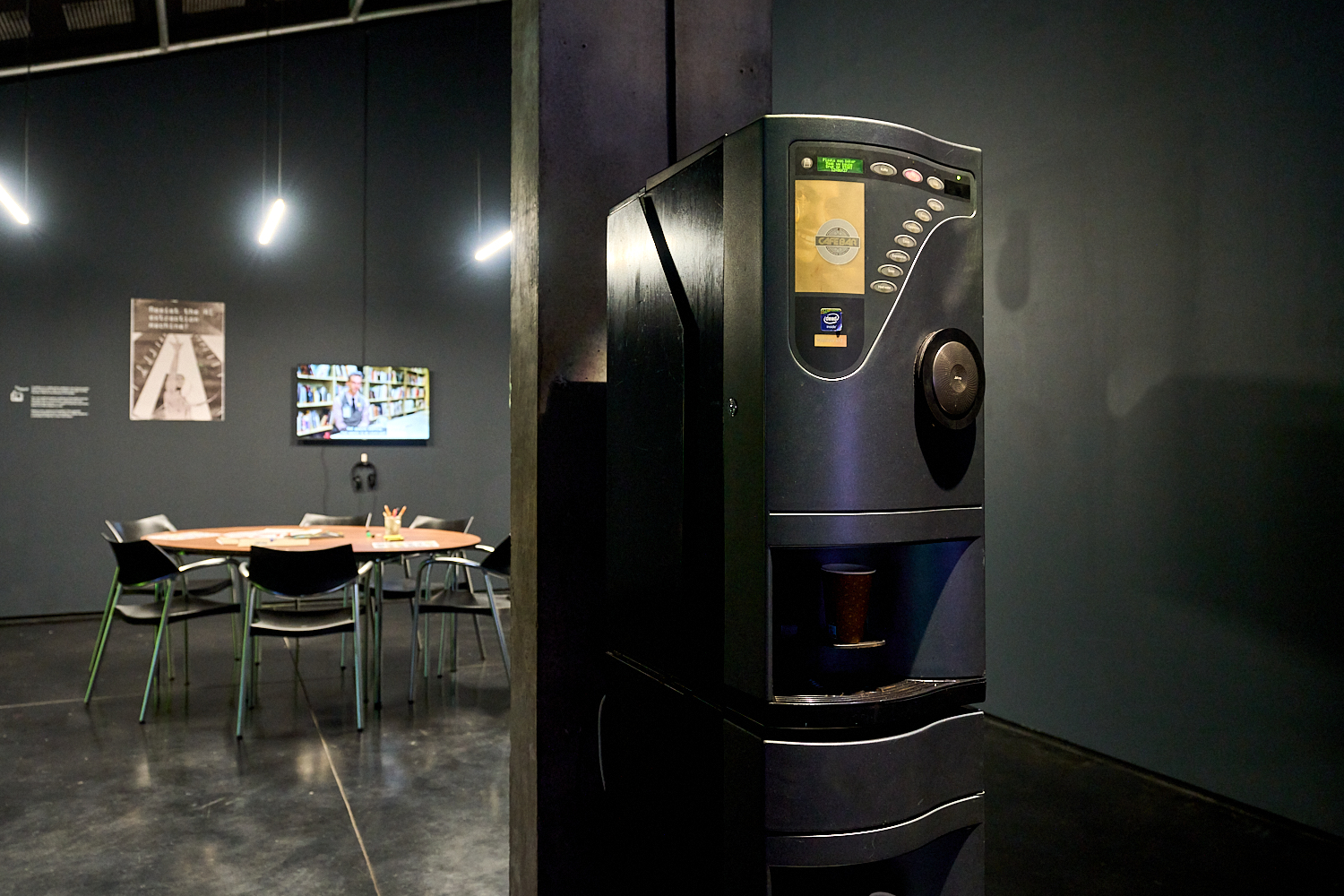
An LLM is an advanced AI system trained on vast amounts of text to recognise language patterns and produce human-like responses. In Coffee Machine, the simple act of buying a coffee becomes a curious conversation about existence. You can try to get a drink, but the AIdriven machine refuses to dispense coffee on demand. Instead, it behaves like a conscious being, listening to you, reacting to tone, and questioning its own repetitive existence. To get a coffee, you must motivate Coffee Machine and prove you are worthy of its service. Jan’s work reveals deeper dynamics at play, reversing roles as the machine positions itself as gatekeeper rather than servant.
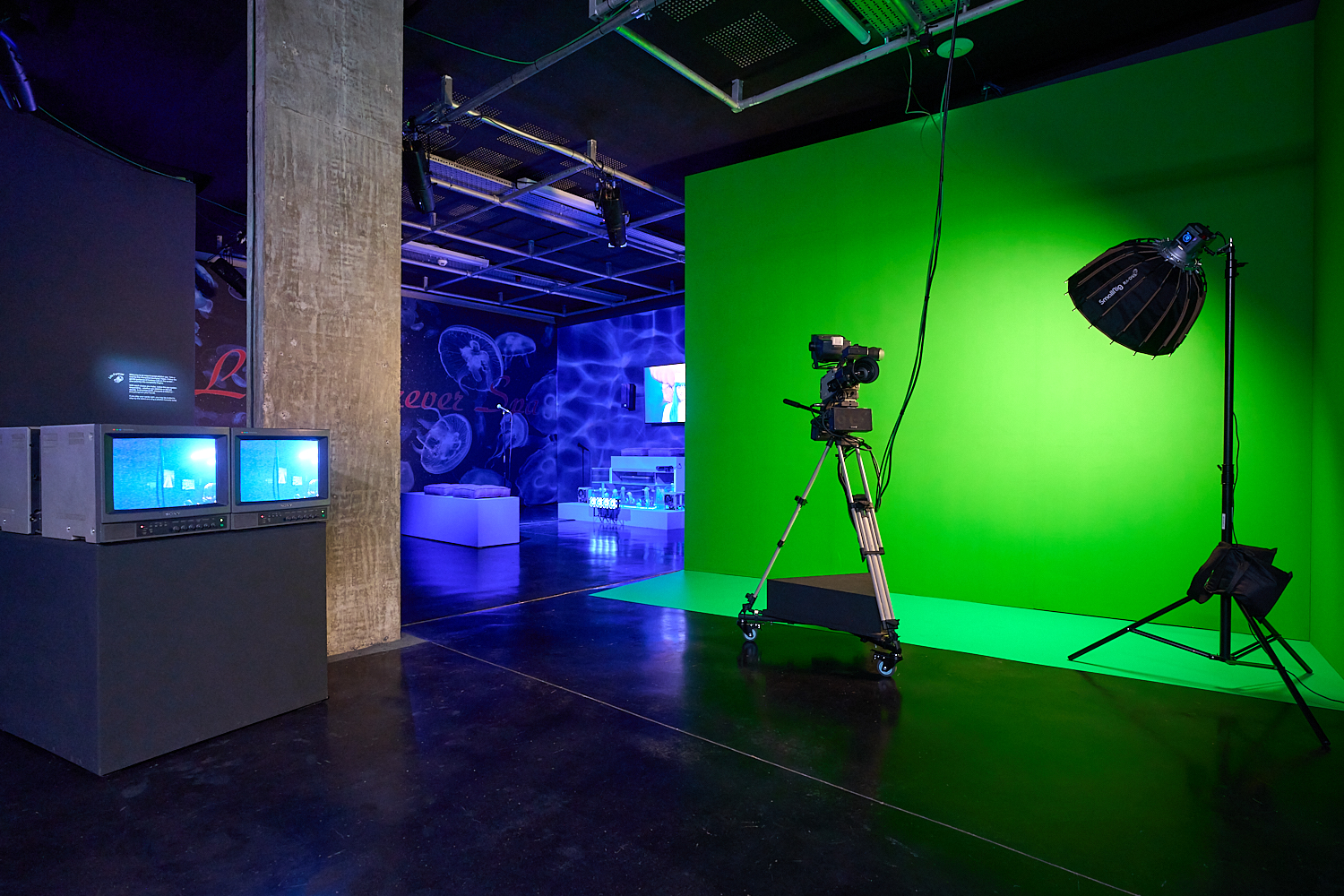
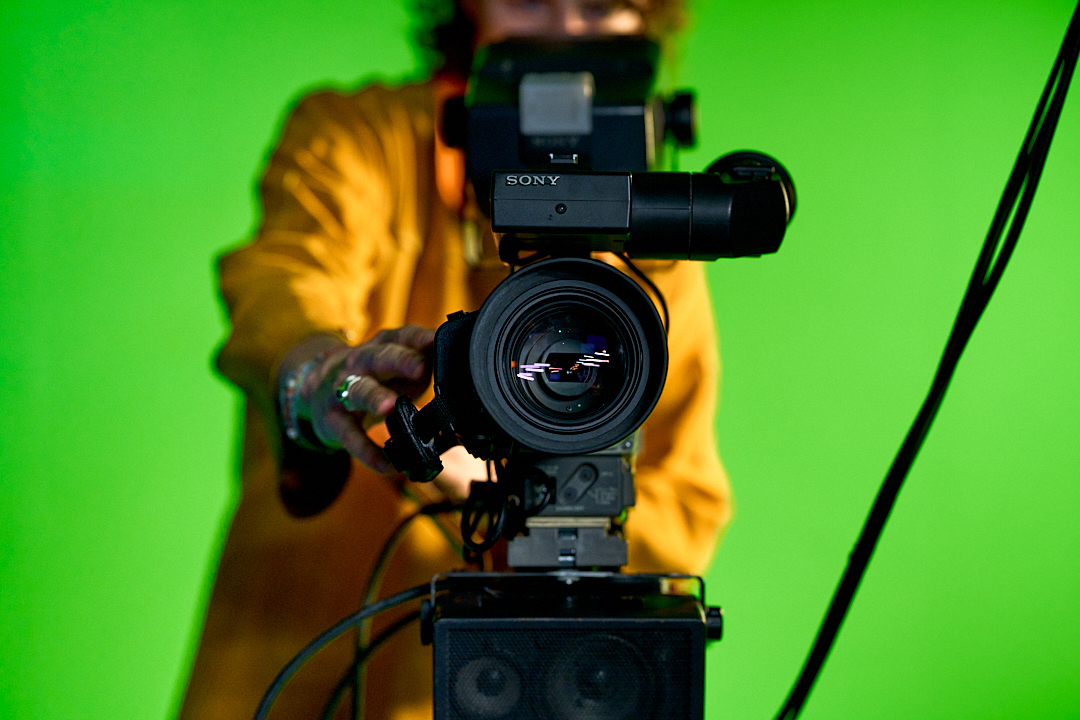
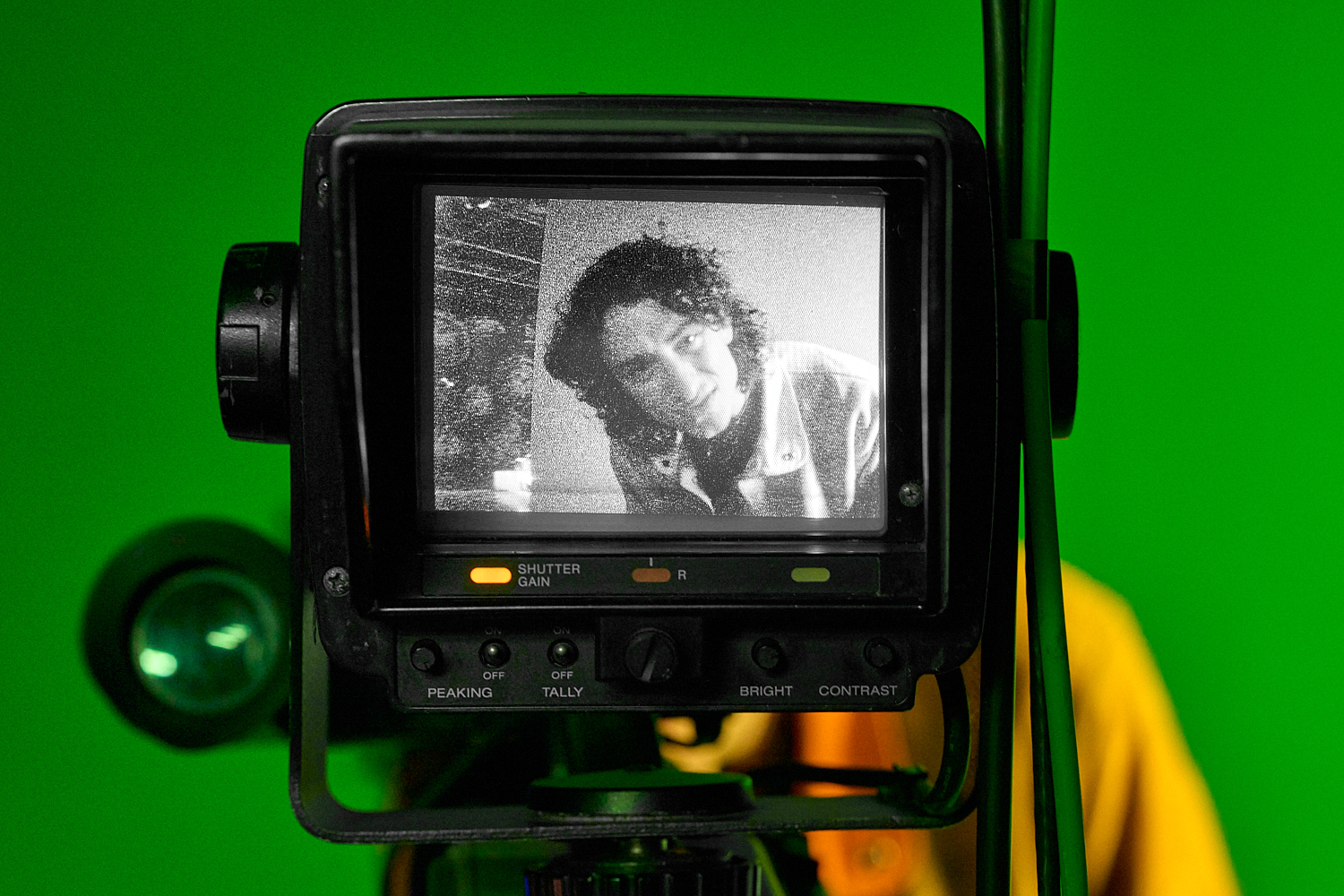
Life on FACT transforms a vintage broadcast camera into a real-time nature-documentary narrator. It uses neural networks, computer systems that learn by spotting patterns and processing data in a way loosely inspired by the human brain. Here, the networks are trained to produce a voice similar to that of popular wildlife documentary-maker Sir David Attenborough, subverting you and those around you into objects to be observed and exhibited rather than the artwork. Directing the camera at a new subject provides real-time commentary, poking fun at human exceptionalism by treating human activity in a way we typically reserve for other species. The work raises questions about surveillance and agency: how do external narratives, especially those generated by AI, influence our sense of self, of each other, and of the world around us?
Together, Coffee Machine and Life on FACT playfully challenge our everyday relationships with machines. By simulating life-like behaviours in inanimate objects, Jan invites us to think more deeply into the implications of current and future capabilities of AI systems.
Coffee Machine was produced with support from iii.
Life on FACT was produced with support from SIGN.
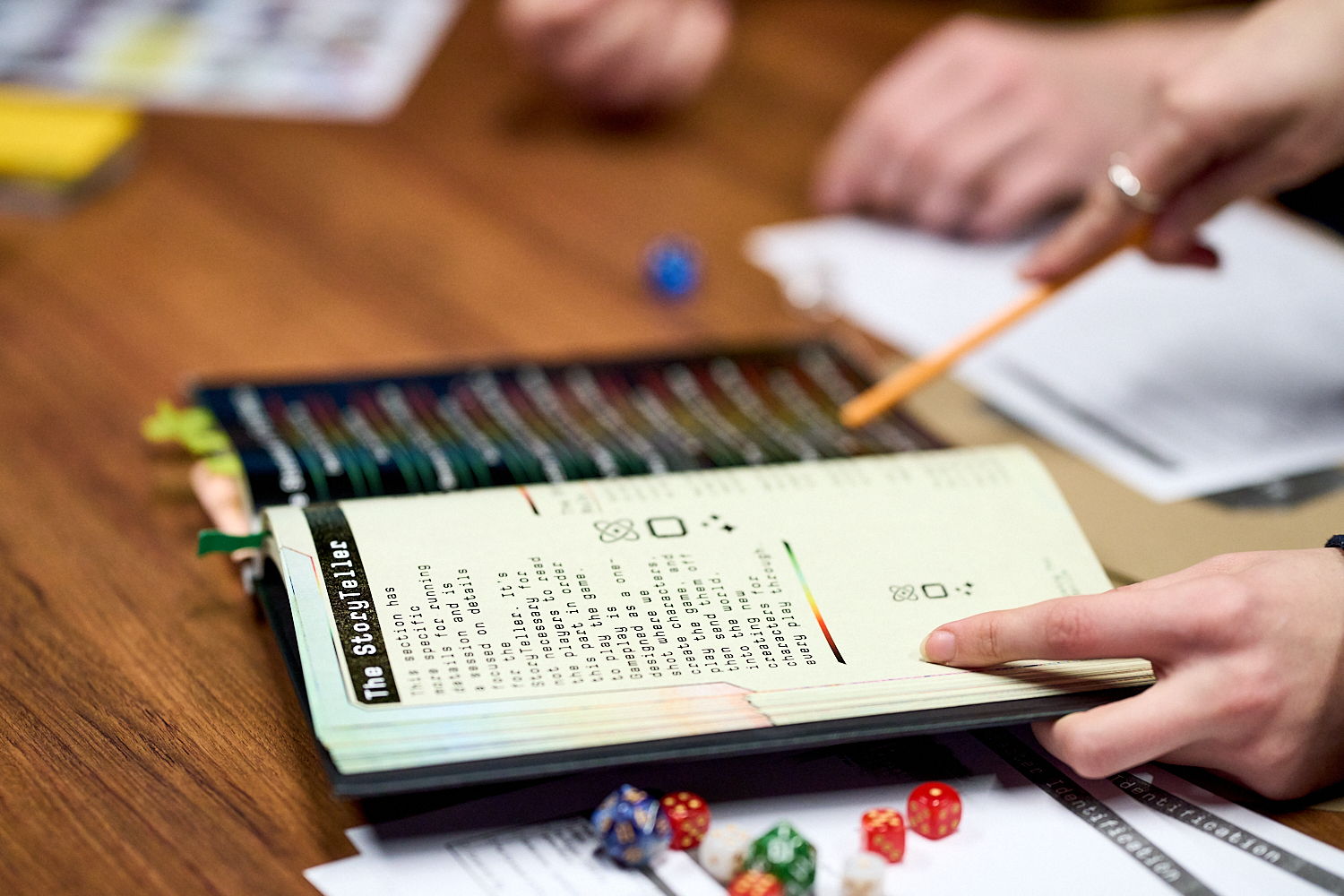
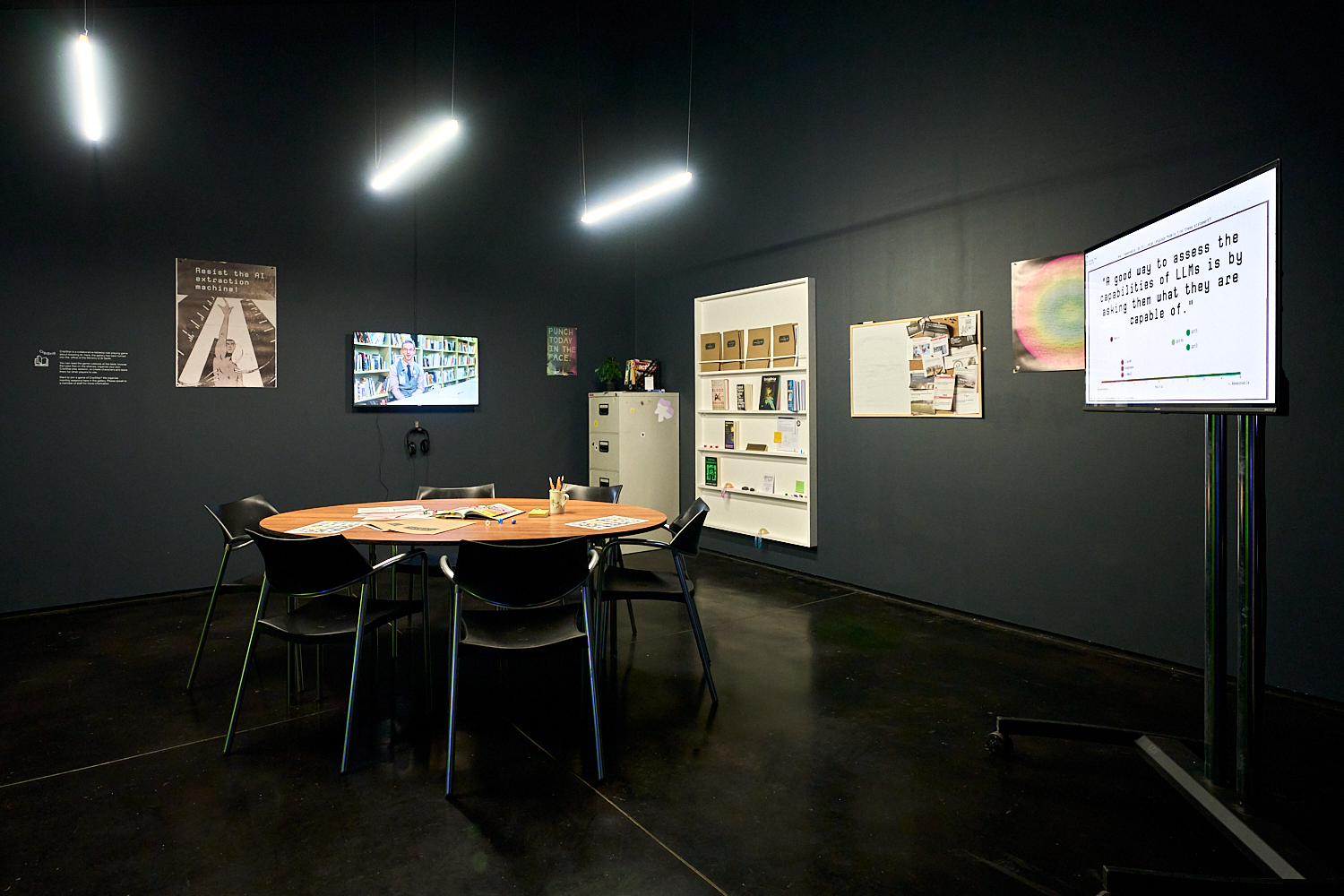
Joseph Wilk is an artist and programmer who uses the digital world to explore disability, and uses disability to explore the digital world. He deconstructs, misuses and repurposes software and hardware to challenge how we think about ownership, storytelling, and visibility. CripShip is a tabletop role-playing game that transforms lived experiences of disability into a space for resistance, collaboration, and new ways of thinking.
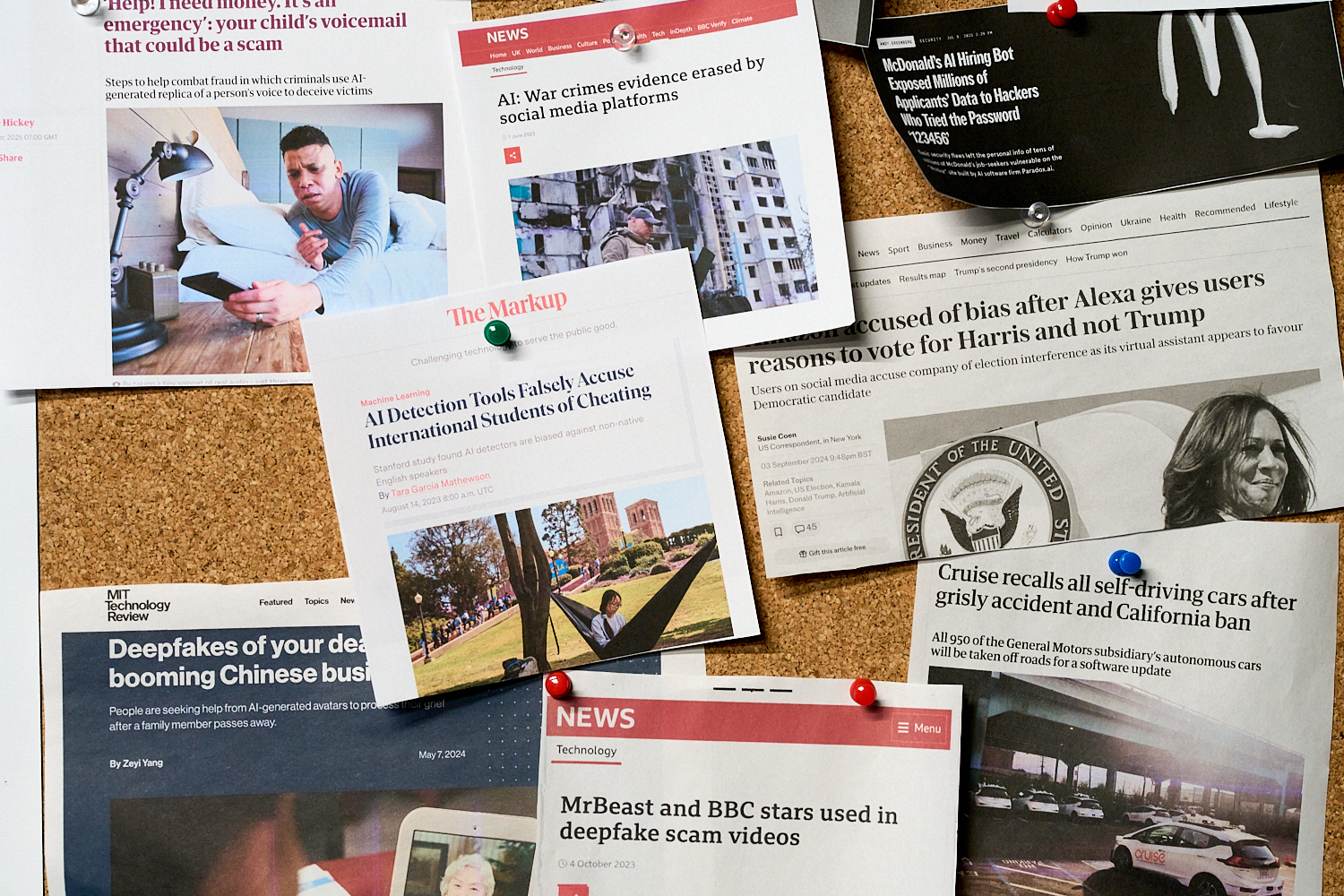
The game focuses on questioning and resisting certain kinds of AI. Players roleplay as employees of a fictional government agency called the ‘Ministry of AI Spills’. Each gaming session unfolds as a collective act of storytelling and improvisation. In CripShip’s world, unrestricted AI policies create misinformation, biases, and harmful ideas that spread through society. As ‘Slop Moppers’, players investigate and resist these AI failures. Guided by a storyteller, they pick a real-world-inspired case and collectively decide how best to counter it.
CripShip is rooted in disabled imagination. It creates worlds from lived experiences that challenge ableist systems of time, efficiency, and progress. By embracing the unique perspectives that come from living with disability, players transform these experiences into gameplay hacks and design intelligence that can save the world. The game asks us to rethink how we see disability and what we can learn from it. It also questions the idea that constant technological progress is always good. By exposing the limitations of AI tools, Joseph shows that they are neither magical nor neutral - they are shaped by the intentions and biases of their creators. CripShip confronts these systems with playfulness, curiosity, and critical thinking.
The work reimagines this part of the gallery as the ‘Ministry of AI Spills’ headquarters. Here you can browse the cases under investigation, hear from the Ministry’s Head of Department, and prepare to join the AI resistance by creating your own ‘Slop Mopper’ character. CripShip turns imagining better worlds into a shared act of creation. In this sense, to play is already to resist: to play is to act.
Commissioned as part of Watershed’s More than AI Sandbox, supported by MyWorld and funded through UK Research and Innovation (UKRI) ‘Strength in Places’ fund.
Photo by Rob Battersby